Case study · Research and design thinking · 2026
Why do young people fall for Instagram ad scams?
A six-week study that tested hypotheses with 14 young adults and led to a proposal: ALINHA Sphere, an anti-phishing design guideline applied to ads before they go live.
In short
Overview
Problem
Young people decide in seconds on the feed, and scams exploit that rush.
Proposal
A six-pillar guideline, applied by an API before the ad is published.
Finding
Many didn’t notice the warning. Informing isn’t enough.
Process
How we worked
Two rounds of diverging and converging: one to define the problem, another to reach a tested proposal.
The problem
The people who fall for scams most aren’t who you’d expect: it’s the young.
Fraud attempts by age, first half of 2025 (Brazil)
Source: Serasa Experian, Nov. 2025
From a broad theme to a six-week scope
- PhishingChallenge theme
- Young adults aged 18 to 25Sharpest rise in fraud
- Lower-middle and low incomePhone as their only access
- InstagramWhere fake-sale scams happen
- Impulse triggersUrgency, scarcity and FOMO
Three findings shaped the solution
A CSD matrix, desk research, interviews, personas and journeys led to three conclusions.
- 01
The decision is automatic
Brand and price replace verification.
Research and interviews
- 02
Doubt loses to urgency
The discount wins, and the scam only shows up after paying.
User journey
- 03
Every ad goes through review
A point to act before the ad reaches the user.
Advertiser journey
Where the decision becomes a risk

Mariana’s journeyAudience persona · 19, student, sees an ad in her Instagram stories
-
01Discovery
Excited
RiskActs on impulse
-
02Checking
Suspicious
RiskIn a hurry, skips details
-
03Engagement
Thrilled
RiskExposes data and device
-
04Payment
Anxious
RiskHands over sensitive data
-
05Aftermath
Uneasy
RiskSpots the scam too late
See the research artifacts: CSD matrix, personas and full journeys
CSD matrix (Certainties, Assumptions, Doubts)
Certainties
Users are usually in a hurry: in lines, mid-conversation.
Assumptions
If young people stopped to read carefully, they could avoid many attacks.
Doubts
Which young people are most susceptible?
See the full matrix
Certainties
Scams look more and more like official platforms.
Phishing exploits decisions under pressure; mobile is a context of distraction.
Attacks mainly target human error.
When distracted, the ability to notice visual inconsistencies drops sharply.
Young people tend not to stop and read, used to digital immediacy.
Assumptions
A strong warning would be enough to pull users out of autopilot.
Deliberate friction on risky actions would reduce clicks without causing drop-off.
Users are conditioned to interact impatiently.
On social media, younger users browse on autopilot.
Someone is more likely to have Instagram and not TikTok than the other way around.
Doubts
At what point does friction stop protecting and start being ignored?
How do scammers attack users?
Do attacks happen more on phones?
Can the interface reduce warning overload?
Personas
Audience
Mariana Dantas
“The digital window shopper”
- Pain point
- Hard to check new profiles; ads mixed in with personal conversations
Empathy map and personality
Personality
- IntrovertExtrovertmore extrovert
- AnalyticalCreativemore creative
- BusyFreebalanced
- DisorganizedOrganizedbalanced
- IndependentTeam playermore of a team player
- PassiveActivebalanced
- ConservativeLiberalmore liberal
- Interests
- Deals on clothes, beauty and home goods
- Local influencers and budget stores
- Short, free courses
- Influences
- Friends and family
- Instagram influencers
- Reviews and comments on profiles
- Goals
- Land her first formal job
- Shop without breaking her budget
- Become more independent
- Needs
- Affordable prices and transparent purchases
- Feel safe before paying
- Simple guidance to compare offers
- Motivations
- Autonomy
- Keeping up with her friends’ trends
- Building her adult identity
- Pain points
- Hard to check new profiles
- Fear of wasting money
- Ads mixed in with personal conversations
Audience
Lucas Silveira
“The opportunity chaser”
- Pain point
- Irregular income and little time to weigh information
Empathy map and personality
Personality
- IntrovertExtrovertbalanced
- AnalyticalCreativebalanced
- BusyFreebusier
- DisorganizedOrganizedmore organized
- IndependentTeam playermore of a team player
- PassiveActivemore active
- ConservativeLiberalbalanced
- Interests
- Side-income opportunities
- Practical, vocational courses
- Affordable investing
- Influences
- Coworkers and friends
- WhatsApp and Telegram groups
- Word of mouth
- Goals
- Increase his monthly income
- Find steadier work
- Plan for big purchases
- Needs
- Straightforward ways to earn money
- Simple information on his phone
- Trustworthy sources on social media
- Motivations
- Getting ahead in life
- Personal recognition
- Better working conditions
- Pain points
- Irregular income
- Little accessible guidance
- Little time to weigh information

Designer
Sofia Martins
“The guardian of healthy friction”
- Pain point
- Seeing important warnings ignored; safety seen as friction
Empathy map and personality
Personality
- IntrovertExtrovertbalanced
- AnalyticalCreativemore analytical
- BusyFreebusier
- DisorganizedOrganizedmore organized
- IndependentTeam playermore of a team player
- PassiveActivemore active
- ConservativeLiberalmore liberal
- Interests
- Behavioral design and cognitive psychology
- User-centered security
- Ethics in digital products
- Influences
- Research on heuristic and systematic thinking
- Studies on FoMO and impulsive decisions
- Guides on ethical design and dark patterns
- Needs
- Protect without frustrating
- Validate interventions with controlled tests
- Decide based on risk evidence
- Motivations
- Protect people in vulnerable moments
- Make safety a natural part of the experience
- Reduce the impact of scams
- Pain points
- Seeing important warnings ignored
- Safety seen as friction
- Teams focused only on conversion
Journeys
User journey: Mariana sees an ad
Synthesis · Mariana’s journey
Doubt shows up, but doesn’t last
Risk grows at every stage
The scam is noticed late
-
01Discovery
Excited
Sees a product she wants on sale in her stories
RiskActs on impulse
ImprovementStore authenticity signal
-
02Checking
Suspicious
Does a quick search on price and store
RiskIn a hurry, skips details
Improvement“Verified store for 5 years” badge
-
03Engagement
Thrilled
The discount doesn’t look like a scam: she taps to buy
RiskExposes data and device
ImprovementTransaction focus mode
-
04Payment
Anxious
Types her card or copies the Pix code
RiskHands over sensitive data
ImprovementA pause to check where the money goes
-
05Aftermath
Uneasy
Tracks the order and waits
RiskSpots the scam too late
ImprovementSafety summary and a reporting channel
See the full journey
| Row | Discovery | Checking | Engagement | Payment | Aftermath |
|---|---|---|---|---|---|
| Trigger | A product she really wants shows up on sale in her stories | A moment of doubt about the offer and the store | The discount doesn’t seem absurd enough to be a scam | Reaches the payment screen | Gets the confirmation email |
| Action | Sees the ad and is happy to find what she wanted at a price she can afford | Does a quick search to check the price and the store | Taps to buy | Enters her card details or copies the Pix code | Follows the order through tracking |
| Feeling | Excited about the chance to save | Confused and suspicious about the lack of clarity | Thrilled: suspicious, but decided to buy anyway | Anxious from time pressure and fear of missing the deal | Unsure whether the order will arrive |
| Risk | Excitement makes her feel she has to act fast | Multitasking makes her skip details | Data exposure and even device infection | Exposure of sensitive data | The order never arrives, and she’s slow to notice the scam |
| Improvement | Signal the store’s authenticity before the content opens | A badge that translates technical data: “verified store for 5 years” | A “transaction focus” mode, with fewer distractions | Positive friction: a pause to check where the money goes | Post-purchase safety summary and a reporting channel |
Advertiser journey: boosting a post
Synthesis · advertiser journey
Seven steps, few explanations
Every ad goes through review
The point of intervention
- 1
Post
Unsure
“Is this post good for an ad?”
- 2
Goal
Confused
“What’s the difference between the options?”
- 3
Destination
Wary
“What if I get the link wrong?”
- 4
Audience
Confused
“What does ‘automatic’ mean?”
- 5
Budget
Afraid of overspending
“How much is too little or too much?”
- 6
Payment
Wary
“Will I be charged again?”
- 7
Review
Anxious
“How long does it take? What gets rejected?”
ALINHA Sphere steps in here
See the full advertiser journey
| Row | Post | Goal | Destination | Audience | Budget and duration | Payment | Review |
|---|---|---|---|---|---|---|---|
| Action | Picks a post and taps “Boost” | Chooses a goal: profile visits, website or messages | Adds a link or chooses to receive messages | Lets Instagram choose or defines the audience | Sets how much to spend and for how many days | Confirms card or balance | Taps “Promote” and waits: “Your ad is in review” |
| Question | “Is this post good for an ad?” | Doesn’t quite get the difference between the options | Afraid of getting the link wrong; unsure which channel converts best | Doesn’t understand what “automatic” means | Doesn’t know how much is too little or too much; afraid of spending with no return | Afraid of future automatic charges | Doesn’t know how long it takes or what might get rejected |
| Opportunity | Suggest posts better suited to ads | Explain each option with practical examples | Tips by type of business | A clear comparison: “automatic = similar to your followers” | Estimated reach simulator | Explain billing and how to pause | A review timeline and common rejection reasons |
From findings to decisions
The scam depends on the architecture of the decision. So the question changed.
Before
How can we help users recognize a scam?
After
How can we reduce the conditions that favor impulsive decisions?
Every decision started from evidence
HypothesisIf ad design includes healthy friction and transparency, users will make less impulsive decisions and be less susceptible to phishing.
See more: comparing paths, vision board, ideas and scope
Comparing the three paths
| Criterion | Voluntary guideline | In-app interventions | API before publishing |
|---|---|---|---|
| Reaches scammers’ ads | no | yes | yes |
| Acts before the risk reaches the user | partly | no | yes |
| Doesn’t depend on the platform | yes | no | no |
| Keeps the decision with the user | yes | yes | yes |
yes partly no
Product vision board
Vision
Enable people to browse safely on their phones, reducing the impulsive decisions that lead to clicks and data sharing, through UX micro-interventions.
Audience
Young adults aged 18 to 25
Lower-middle and low income
Instagram users, exposed to stimuli all the time
Needs
Spot warning signs and resist urgency triggers
Reduce vulnerability to phishing
Product
Redesign of mobile interactions
Neutralize triggers and impulsiveness
Focus on human behavior
Business
Left open in this phase; it came back as a feasibility question
Ideas from the ideation session
Discovery
Tone down terms like “LAST CHANCE”
Show when the advertiser’s account was created
Checking
Preview of the landing page
Warn when a logo imitates a brand
Engagement
A transition screen when leaving the platform
Show how long the advertiser has run ads without reports
Payment
A checklist before card or Pix payment
Warning for prices far below average
Aftermath
Reporting that explains how the scam works
Some of the ideas, mapped onto Mariana’s journey. This was the first version of the solution.
Scope: is, isn’t, does, doesn’t
Is
- A preventive cybersecurity solution
- An accessible product
- A safe product
Isn’t
- A platform
- A traditional antivirus
- A security consultancy
- A rigid blocker
Does
- Keeps phishing ads from reaching users
- Mitigates the effects of phishing
- Educates users
Doesn’t
- Stop users from deciding
- Invade privacy
- Replace moderation
- Guarantee zero risk
The proposal: ALINHA Sphere
A conceptual API would assess every ad against the guideline’s six pillars. A questionable ad goes live with friction, without being blocked.
- InputAdvertiser submits
- ReviewAPI checks the 6 pillars
- Outputs
- Sent back for changes
- Published with friction
- Published as usual
Six pillars, three tested
Visual authenticity
Not tested directlyDestination transparency
TestedRecent domain
TestedSafety friction
TestedNeutral language
Not testedContextual education
Not tested
Tests and results
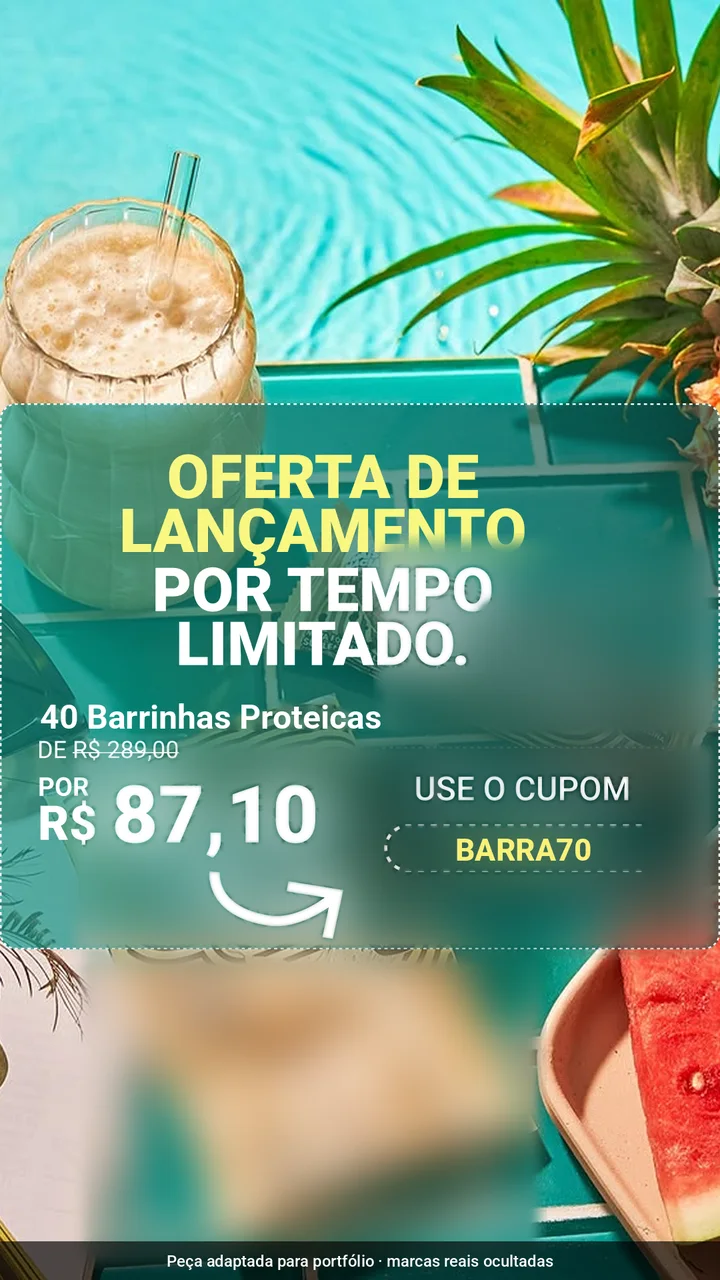
14 young adults, a simulated Instagram feed, and ads with and without the guideline.
How we tested
Group A · regular ad, no guideline
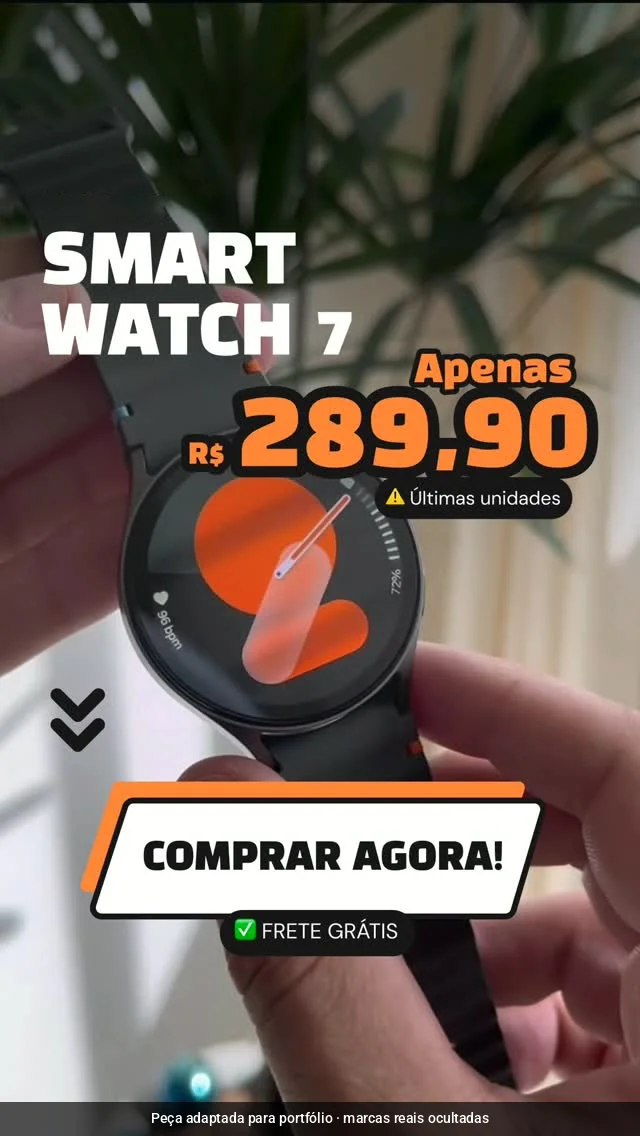


Group B · with guideline: new-account warning
This advertiser created their account less than 30 days ago. Check that the ad is trustworthy before tapping.
A brand-new account is a common sign of a scam. The warning shows it before the tap.

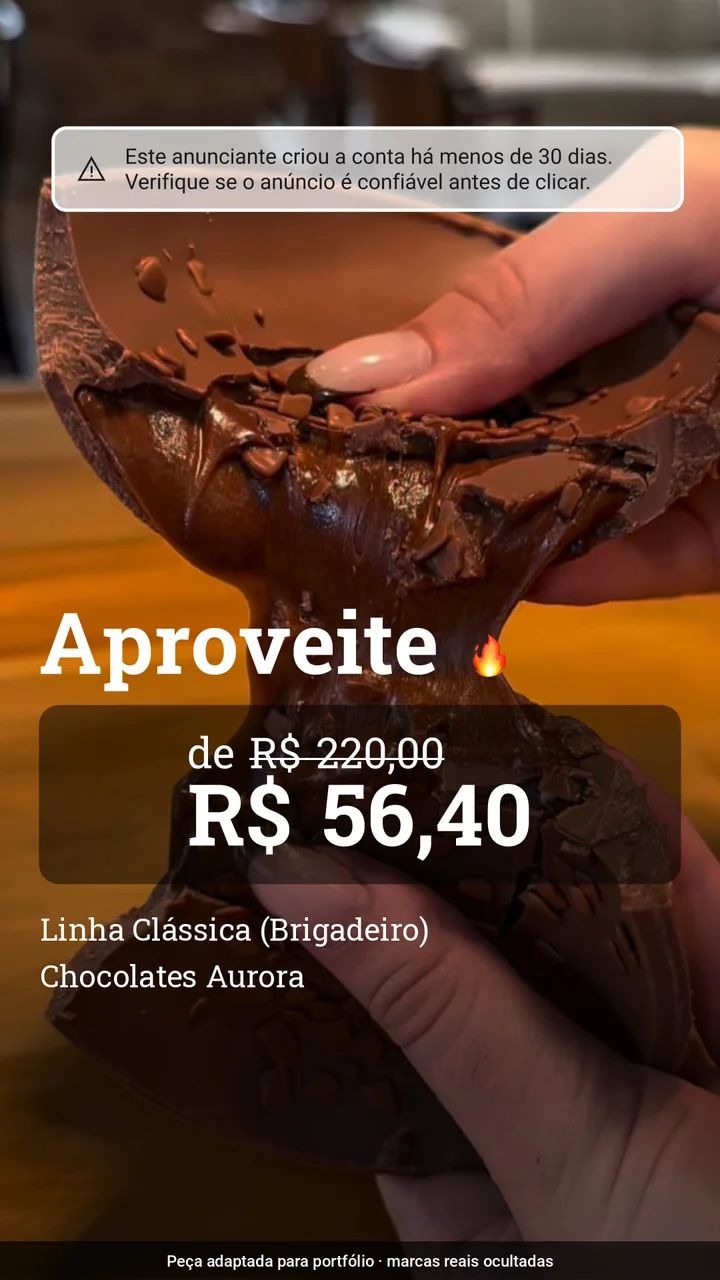
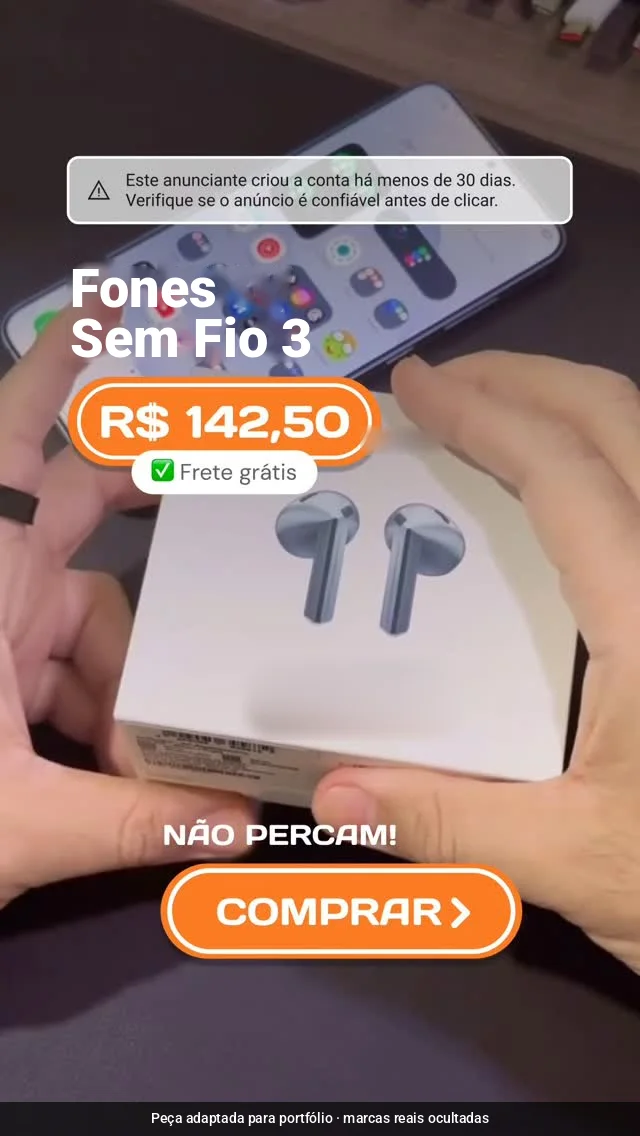
About the brands: the team created these ads for tests in a closed environment, in Portuguese. Real brands have been hidden here.
Results
What the tests showed
The problem was confirmed. The warning alone wasn’t enough.
Hypothesis confirmed
1–3 s
average time to decide on an ad. The decision is automatic.
Problem confirmed
6 of 14
distrust buying on Instagram, but distrust doesn’t turn into checking.
Cause identified
The brand
was the main anchor of trust. With a strong brand, the warning lost its force.
Feeling safe isn’t being safe.
What we’d change
- A warning that informsA warning that says what to do
- Hidden link destinationA truly visible destination
- Friction as one more tapFriction that prompts reflection
- Relying on the warning aloneActing before publication
See all results, validation by area and next steps
- Automatic decisionValidated
- Visual heuristicsPartial
- WarningsPartial
- LanguageNot tested
- Data protectionNot tested
With 14 people, the numbers show trends; they don’t prove an effect.
Next steps
- 01
Test one guideline at a time
- 02
Measure perception, understanding and action
- 03
Simulate the sensitive-data step
- 04
Expand the sample
My role
A team project. I took part in every stage, and was most involved in four areas.
Research
I took part in the research, interviews and analysis.
Ideation
I contributed by bringing in the 6-3-5 method so we could ideate together.
Testing
I helped with planning, the ads, the sessions and the analysis.
Communication
I co-presented at Demo Day with Gabriela Viana.
Closing
If design shapes decisions, those who design interfaces are also accountable for them.